IPRE’s Board approved the Annual Report for 2022 and Activity Priorities for 2023-2025
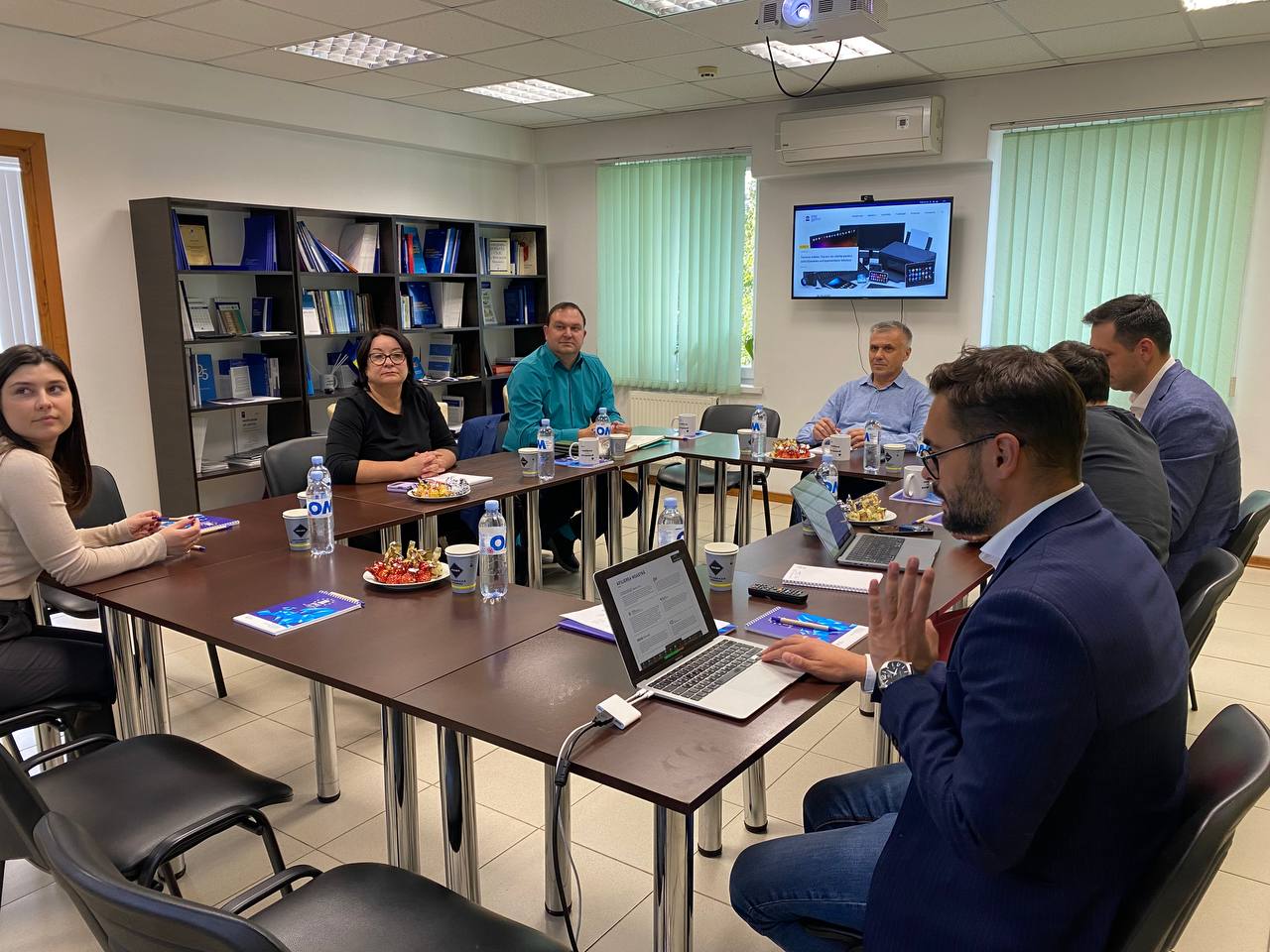
On Friday, October 6th, 2023, the annual meeting of IPRE Board was held. During the meeting, IPRE’s activity in2022 was assessed and the organization’s priorities for 2023-2025 were agreed.
The key results of 2022 were the following:
Moldova’s European integration
- We have expended our cooperation with other think-tanks within the EaP Think Tank Network, including the Berlin-based Institute for European Policies, Chatham House, European Council on Foreign Relations (ECFR, Paris), the German Foreign Affairs Council (DGAP, Berlin), the EU Institute for Security Studies and the Hague-based Institute for International Relations “Clingendael”.
- We launched, in partnership with Expert-Grup and CRJM, the #ThinkTanks4EUmembership initiative and contributed to advancing the European integration process.
- We have contributed to filling in the questionnaire of the European Commission in the context of Moldova’s application for accession to the EU.
- We actively promoted the importance of our country obtaining the status of EU candidate country in partnership with other national and European research centers, as part of advocacy visits in Hague, Brussels and Berlin.
- Together with the New Europe Center in Kiyv and the Open Society Foundation in Georgia, we launched the first edition of the “Accession Exchange Forum”.
- We contributed, together with the Friedrich Ebert Foundation and the Foreign Policy Association, to the organization of the ninth edition of the European Integration Forum;
- We continued to monitor the implementation of the EU-Moldova Association Agreement and published a new Shadow Report after 8 years of implementation of the Agreement.
- We contributed together with the Centre for European Policy Studies (CEPS) to the ex-post evaluation of the implementation of the Deep and Comprehensive Free Trade Area with the European Union, in accordance with the Association Agreement.
Justice and anti-corruption
- We expanded cooperation with development partners from the EU, the US, as well as national public authorities in the justice and anticorruption sector, contributing to increased transparency, strategic communication, integrity and efficiency in the justice sector;
- We facilitated policy dialogues in the field of justice and anticorruption, with the participation of key actors from civil society, the community of experts, public authorities and European experts.
- We contributed with policy proposals and opinions on launching and carrying out the extraordinary evaluation process of key actors in the justice sector.
- We identified the main needs and formulated over 100 recommendations for increasing the institutional capacities and efficiency of the Anticorruption Prosecutor’s Office in combating high-profile corruption.
Public administration reform
- We managed to improve the capacities of civil servants by developing the training program on the practical use of guidelines for ex-ante and ex-post evaluation of public policies.
- We contributed to popularizing the 2030 Agenda and the Sustainable Development Goals at regional and local level.
- We supported local public authorities in increasing the participation of citizens and civil society in decision-making processes, developing public policy proposals and organizing public hearings.
- We promoted and supported the adoption of the new strategic framework for central and local public administration reform.
Empowering Youth
- We launched a new capacity-building program for young specialists – “Public Policies for Development”. Over 20 young professionals were trained in research and analysis of public policies, as well as public communication and advocacy. We offered 5 scholarships to the most motivated and interested young people for developing public policy studies and a mentoring program for 6 months.
- We continued the #BeTheChange empowerment program and selected 6 young interns who wrote blog reviews, organized public events and participated in IPRE activities carried out at local, national and European level.
- We launched the Public Administration School for etnic minority youth, attended by 25 young representatives of different ethnic groups in the country.
Information, communication and media partnerships
- We expanded our partnerships with the media by launching the weekly radio show “Paralela 47”, focused on foreign policy and security topics, broadcasted every Friday, live, by Radio Moldova.
- We have developed, in partnership with Radio Chisinau, 21 podcasts “We and Europe”, broadcasted on radio and online, on podcast platforms and IPRE communication channels.
- We continued our collaboration with IPN.md by publishing 12 analytical comments and op-eds dedicated to the Europeanization process of Moldova.
- We developed, in partnership with the e-Government Agency (AGE), a series of 15 public discussions “Digital Moldova”, during which we addressed the needs, challenges and priorities related to the digital transformation process in Moldova.
- We have initiated, in cooperation with Expert-Grup, within the National Platform of the Eastern Partnership Civil Society Forum, a national information campaign #MoldovaEsteEuropeană.
- We contributed to the effort to tackle disinformation as part of the #inforMD initiative carried out in partnership with IPIS and the European Policy Institute in Berlin.
- We initiated with other civil society organizations from the National Platform of the EaP Civil Society Forum, the civic campaign #StopWar – a national campaign to inform and show solidarity with the people of Ukraine against the unjust war unleashed by Russia against Ukraine.
For more details, IPRE’s 2022 Annual Report can be consulted here in Romanian and here in English.
Additionally, as a result of the mid-term review of IPRE’s Institutional Development Strategy, considering the prospects of the EU accession process, the challenges and opportunities of the changing security environment and the need to strengthen the internal and external resilience of Moldova, the following six key priorities will guide IPRE activity in 2023-2025:
- Support and advance Moldova’s EU accession process, in particular through #ThinkTanks4EUMembership and #CivilSociety4EuropeanIntegration initiatives.
- Contribute to ensuring the integrity, efficiency and independence of Moldova’s justice and anticorruption system through #Justice4Moldova and #CivilSociety4Integrtity initiatives.
- Support the implementation of public administration reform in Moldova at central and local level, including by advancing the digital transformation
- Contributing to the implementation of reintegration, national security and foreign policies of Moldova.
- Accelerating the digital transformation process of Moldova by promoting digital identity and digital services at the national level and in the diaspora.
- Empowering youth and young professionals in public policies by implementing training programs, internships and scholarships.
The updated Action Plan for 2023-2025, part of the IPRE Institutional Development Strategy (2020-2025) is available here in Romanian and here in English.