
Comment by Adrian Ermurachi: Local Public Administration Reform: Beyond the Models, What Matters Is the Way Decisions Are Made
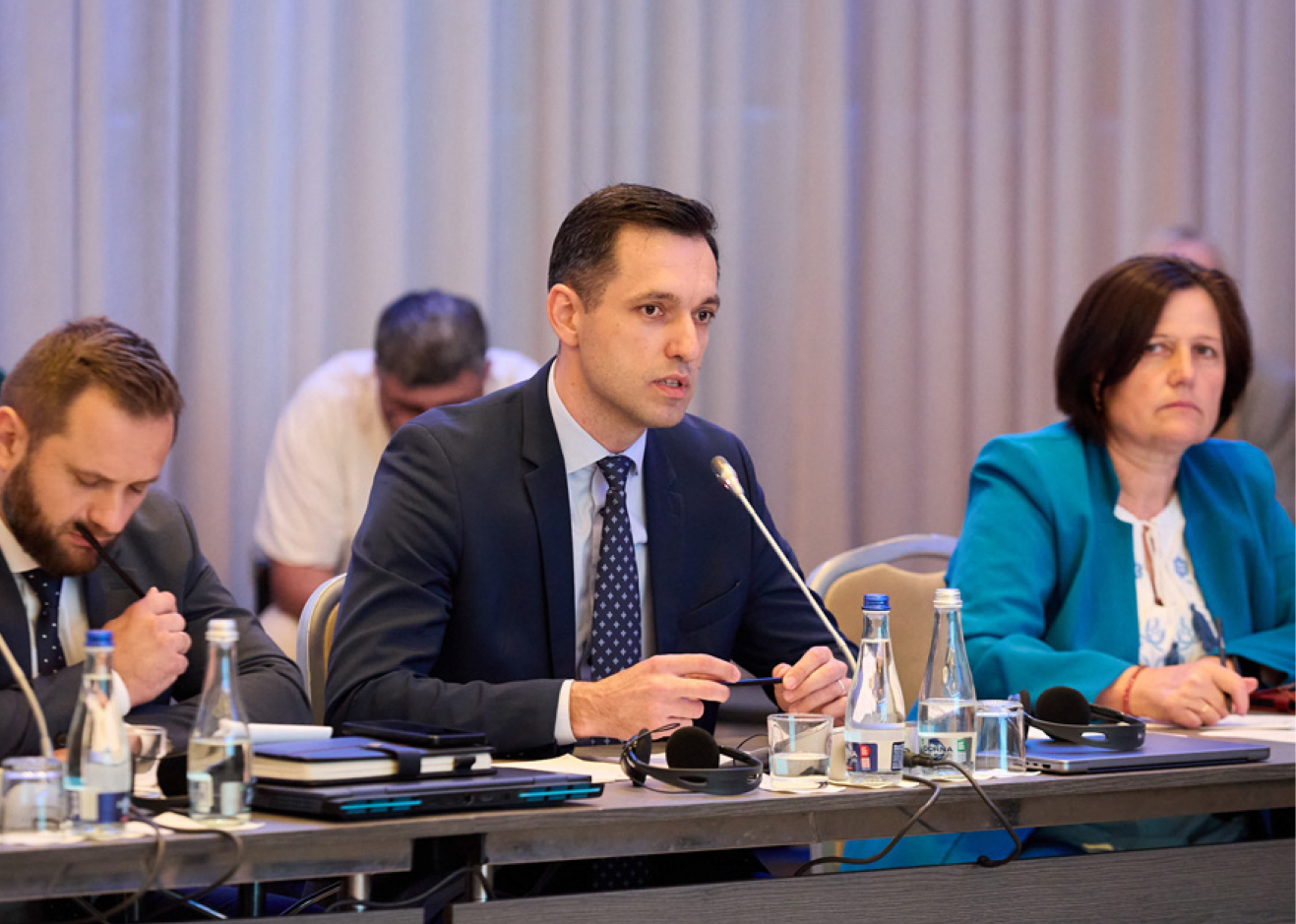
Adrian Ermurachi, Co-executive Director of IPRE, provided a commentary published in the monthly bulletin no. 5 (May 2026) of the Friedrich Ebert Stiftung Moldova Foundation.
Local public administration reform in the Republic of Moldova has ceased to be a taboo subject. After several unsuccessful attempts and multiple decentralization policies that followed one another without being fully implemented, the discussi- on has entered a new phase.
The country’s 892 municipalities, of which 776 (almost 87%) have fewer than 3,000 inhabitants, are now the subject of a reorganization effort. In the spring of 2026, the Government published a reform concept, while the Congress of Local Authorities of Moldo- va (CALM) and several independent ex- perts put forward alternative proposals.
Under these circumstances, the public debate has shifted. The question is no longer whether reform is necessary, but rather how it should be carried out: according to which criteria, at what pace, and through what instruments.
In broad terms, three main reform models have emerged in the public debate, with significant diffe- rences between them. The greatest degree of conver- gence can be found in the assessment of the current situation, while the greatest divergence concerns the solutions being proposed.
Government Model
The official concept published by the State Chancel- lery is built around four complementary objectives: administrative-territorial consolidation, enhanced financial autonomy, genuine institutional capacity, and greater transparency and accessibility of public services. The underlying logic of the document is that these objectives cannot be achieved in isolation and that fragmented measures are likely to lead to failure.
The concept combines voluntary amalgamation— supported by a financial package estimated at appro- ximately MDL 6.5 billion for the period 2026–2030, including an increased infrastructure investment incen- tive of MDL 3,000 per inhabitant—with mandatory normative amalgamation for municipalities with fewer than 3,000 residents. At the second tier of adminis- tration, the concept envisages reducing the current 32 districts to 10 new districts, with average populations ranging from 150,000 to 350,000 inhabitants, a scale broadly compatible with the NUTS 3 standard used by the European Union for the programming of structural funds.
The model also includes a number of complementary instruments: Unified Public Service Centres (CUPS), to be hosted in the buildings of former municipal admi- nistrations; the position of mayoral representative in constituent villages; revisions to the transfer formulas of the Financial Support Fund; the redistribution of a share of VAT revenues to municipalities according to demographic thresholds; and dedicated funds for the co-financing of externally funded projects.
The proposed timetable foresees the adoption of the necessary legal framework in October 2026, with the reform entering into force after the local elections scheduled for November 2027.
Alternative Models
At least two alternative reform models are currently being discussed in the public space.
The first, proposed by the Congress of Local Authorities of Moldova (CALM), focuses primarily on reforming the second tier of local public administration. The concept envisages transforming the existing 32 districts into 32 municipalities, following the model currently used for the municipalities of Chișinău and Bălți, without altering the existing structure of first-tier local authorities. Under this vision, responsibilities in the fields of education and social assistance would be transferred from the district level to first-tier local governments. At the same time, certain revenue sources would be redirected to municipa- lities, strengthening local budgets without changing the administrative-territorial map at the first tier.
A second alternative has been proposed by entrepre- neur Vasile Tofan in a study entitled The Baltic For- mula. This approach is based on a different premise: administrative reforms implemented gradually or only partially in countries such as Latvia in 2009, Greece in 2010, or Ukraine before 2020 subsequently requi- red additional rounds of intervention and adjustment within a relatively short period of time. The proposed model envisages the creation of 40 municipalities organized around the current district centres, the complete abolition of the second tier of local public administration, genuine fiscal decentralization, and the introduction of the position of local prefect in constituent villages, drawing on models already in place in Lithuania, Latvia, and Poland.
A Shared Diagnosis
For a public debate that is often polarized, the three reform models show a remarkable degree of conver- gence in their diagnosis of the problem.
All three recognize that Moldova’s administrative fragmentation is a structural challenge. The country’s system is among the most fragmented in Europe.
All three acknowledge that the financial autonomy of municipalities is severely constrained: only 11.1 percent of local budget revenues are generated from own-source revenues, compared to an average of 30 percent across Southeast Europe. All three also agree that districts, in their current form, no longer fulfil the role for which they were originally created.
As far as the diagnosis is concerned, there is broad consensus among the Government, CALM, and inde- pendent experts. When it comes to solutions, howe- ver, the differences are substantial. The question that will ultimately determine the success of the reform is not which solution is inherently superior. Rather, it is how the decision-making process can be designed in such a way that the outcome delivers better services for citizens, rather than creating an administrative disruption that is followed by yet another reform after a single electoral cycle.
Three Questions About the Process
The experience of reforms in other countries shows that their success has depended largely on the quality of the decision-making process. Latvia’s 2009 reform was theoretically well designed, yet it partially failed due to insufficiently calibrated consultations and thresholds that were set too low, making a second round of reform necessary in 2021. Denmark’s 2007 reform was bold, but it was supported by a political and social consensus that had been built over many years before implementation. The difference between the two was not ambition, but process.
Several process-related questions deserve to be raised before a final decision is reflected on the map.
First: Is there a complete set of quantitatively modelled scenarios? The administrative data available through the Strong Municipalities platform make such modelling exercises possible. It remains unclear, however, whether comprehensive alternative scenarios have been developed. What effects would result from a threshold of 5,000 inhabitants instead of 3,000? What would happen under a model with five districts rather than ten? Or under an expanded system of inter-municipal cooperation, inspired by French or Italian models and adapted to the realities of the Republic of Moldova?
Second: What is the projected impact on each individual community? Given the significant disparities between Chisinau and other large cities on the one hand, and smaller localities on the other, it is essential to assess the effects at the level of each administrative unit. For every proposed cluster, detailed assessments should exist—and these assessments should be made public—covering the expected benefits for citizens, potential costs or disadvantages, the alternatives that were considered, and the reasons why a particular configuration was selected over others.
Third: How can a broad consensus be built that extends beyond a single electoral cycle? Territorial reforms make sense only if they can withstand changes in political power. This requires the involvement of both parliamentary and extra- parliamentary opposition parties in at least a minimum consensus regarding the ownership and implementation of the reform. The absence of such a consensus remains one of the greatest risks to the reform’s long-term sustainability.
Three Process Recommendations
Based on these questions, several recommendations can be formulated. All of them concern the decisi- on-making process rather than any specific reform model.
First: Develop and assess multiple alternative mo- dels. In addition to the option based on a 3,000+ population threshold, at least two alternative sce- narios—such as thresholds of 5,000+ and 10,000+ inhabitants—should be examined so that the public debate can compare genuine alternatives.
Second: Conduct detailed assessments for every proposed cluster and publish them before a final decision is adopted. These assessments should clearly indicate what citizens stand to gain, what they may lose, which alternatives were considered, and which indicators will be monitored after implemen- tation. Such a level of detail would transform public consultation from a communication exercise into an informed decision-making process, enabling citizens to better understand the expected outcomes and anticipated results over a five- or ten-year horizon.
Third: Build a minimum political consensus with the main opposition parties. Although such a process may require additional time in the present, it strengthens long-term implementation and reduces the risk of a future “counter-reform,” similar to the one that took place in 2001.
More Important Than the Model: Trust in the Process
Local public administration reform in the Republic of Moldova has a genuine chance of success. The shared diagnosis among the key stakeholders is sound. Despite their differences, the proposed models contain complementary elements. And for the first time, there is a real political window of opportunity for implementing such a reform.
The greatest risk does not stem from the quality of the available models, but from the decision-making process itself. If the reform is to deliver better ser- vices for citizens rather than create an administrative disruption followed by yet another reform after the next electoral cycle, the decision must be grounded in rigorous analysis and adopted through a credible and carefully managed process.
Ultimately, this is less a question of public administration and more a question of trust.