
IPRE contributes to new TEPSA volume on the future of European security, with a dedicated chapter on the Republic of Moldova
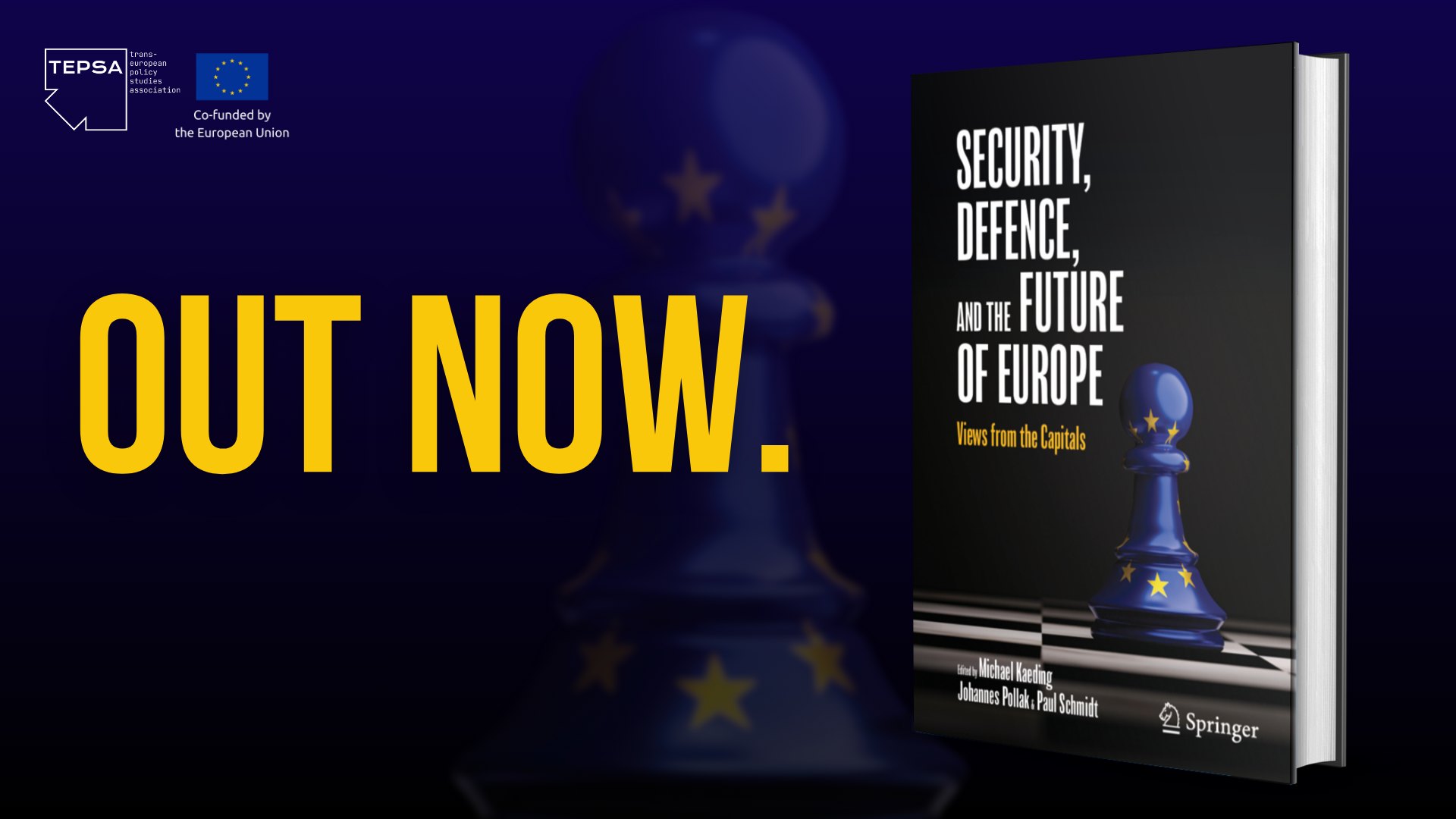
The IPRE team, in partnership with TEPSA – The Trans European Policy Studies Association, has contributed to the collective volume “Security, Defence and the Future of Europe” with a comparative analysis of how Europe is redefining its security and defence priorities in an age of renewed geopolitical tension and uncertainty.
The editorial project was coordinated by Michael Kaeding, Johannes Pollak and Paul Schmidt, and brings together 41 chapters authored by 57 contributors from EU Member States and neighbouring countries. Drawing on insights from across the continent, the book offers a guide to Europe’s diverse perceptions of threats, definitions of security, and positioning within a broader European security architecture.
Our colleagues Iulian Groza and Mihai Mogîldea authored the chapter titled “Moldova’s secured European future: Defence, resilience, and the enlargement imperative”, proposing a series of recommendations to bolster national resilience and expand cooperation with international partners.
Abstract: Moldova’s constitutional neutrality can no longer be equated with passivity. In the context of Russia’s war against Ukraine and intensifying hybrid threats, neutrality must evolve into a framework for resilience, credible deterrence and strategic European alignment. The chapter argues that Moldova’s transformation — anchored in its 2023 National Security Strategy and the EU–Moldova Security and Defence Partnership — offers a model for how neutrality and integration can coexist. The authors call for embedding defence convergence as a new pillar of EU enlargement and outline reforms to reinforce Moldova’s role as a future contributor to European security. Using a “traffic light” analytical framework, the chapter maps Moldova’s risks and progress: red — Russian aggression and hybrid warfare; yellow — institutional fragility and cyber readiness gaps; green — energy independence, democratic oversight and EU security cooperation. Overall, the assessment remains “yellow,” shifting gradually towards “green.”
The book was published by Springer Nature and is available here.
#IPRE #TEPSA #Moldova #EUaccession #SecurityAndDefence #Resilience #Security #ThinkTanks4EUMembership